Friday, January 22, 2016

Project 1 - Element 4 - Abruzere


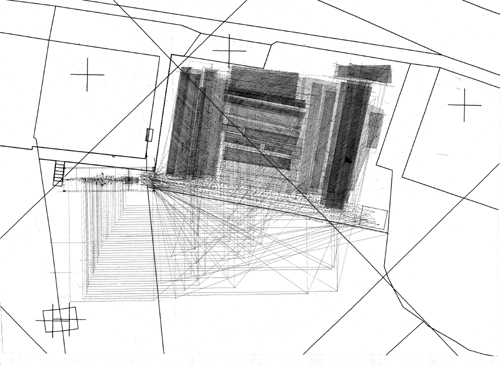
Element 4 uses a series of folded stereotomic and linear tectonic attributes to build an assembly of elements that support the structure of the film. While the heavy parts of the story are present in the film, there are lighter uses of editing that complement and support the larger medium. Throughout the story, the film maker was able to use interweaving patterns of texture and sound to create a consistent and supportable structure to the movie. When needed, supporting cast, or methods were used in order to hold the path of the film, but not take away its meaning. 

Project 1 - Element 3 - Abruzere


Element 3 provides a situational analysis of the perspective that the viewer of the film has compared to the actors and the techniques used to create the film. Through the use of high contrast lighting and spacial representations through the filming process, the viewer is provided continuity via a primary element; in this case, the tree. It gives the film a strong base in which to build around as the story flashes from one journey to the next. In order to make the tree to work as a primary film element, there is a series of complex rigs and used to make the idea stand on its own that is not presented directly to the viewer. Those areas are covered with a thin, mylar layer to provide the significance to the background associations, while providing a mask to cover them up.

Project 1 - Element 2 - Abruzere


Element 2 is a visual exploration in the relationship of characters in the film, and their theoretical linkages in space. There are 3 distinct journeys taken that were depicted in the movie but had to be interwoven together to formulate the director’s vision. The 3 verticals represent the story by which the actors were transitioned through. The primary plot of the main characters are represented by solid planar elements vertically and horizontally through the film. The linear elements represent other character’s journey through the plot, and the center column symbolizes the primary passage of the film and how the characters inter-related. The supporting columns are a represent a juxtaposition of the 3 journeys and the relationships in and out of the primary plot.

Set One of Elements 2, 3, and 4


In this expression of The Fountain I created both a 2D image and a spatial representation of that drawing based on a synthesis of my experience of five aspects of the film’s creation and presentation .

The cinematic terms I chose for this set are: match cut, motif, juxtaposition, time, and montage.

In the drawing I used overlays of Tom’s and Izzy’s faces to define areas of more or less intensity of tonal value.  The tonal value of the image is taken from pictures of Izzy and Tom.  Juxtaposition is shown through the horizontal bands of light and dark, which represent Tom and Izzy, and fade into each other in three vertical regions.  These three vertical regions represent the time element of the movie and also correspond to the eyes, nose, and mouth of the characters, showing match cut from the movie and using the process of match cut in Photoshop.  I chose to use the face as the main organizational base, as it is a main motif in the movie.

The overdrawn lines represent the montage effect by which the movie connects the story, timeline, and thematic elements.

The drawdel version of this picture is a flattened spatial non-literal expression of the same five words.  Juxtaposition is shown through planar and tectonic elements.  Match cut is represented by the object existing from both sides.  Time is shown through the three main horizontal bands of chip board, while montage and motif are shown through the use of intersecting and hidden and revealed aspects of the original 2D drawing.


Thursday, January 14, 2016

Hello!

Here are some reference images I wanted to share with you concerning your current assignments. Although these images don't necessarily adhere to your assignment's formal constraints, I feel they each represent interesting methods of how to visually convey multiple layers of information. Notice their sparse and selective use of color, gradient/fading "wash" techniques, varying line types and weights, careful use of imagery, intricate but light density, and overall subtle nature. All qualities your current drawings should carefully contain. Be delicate but deliberate, soft but firm. Efficient! Good luck!


Tuesday, January 12, 2016

Paragraph about the two drawings


2 drawings.....

literal and figurative.

The line is the method to express the different types of instruments. I used different types of lines to describe my feeling while I am listening to the song (death is the road to awe). the first drawing is driven by the song the literal feeling of the instrument. On the other hand the second drawing is describing the ideas and the feelings from the movie (the fountain) and what does the story means to me.

Death is the Road to Awe - Audio Exploration - Abruzere

Film – The Fountain
Song – Clint Mansell – “Death is the Road to Awe”

Project 1 Audio/Film Exploration

This composition is made up of 2 different layers created while listening to an audio recording of Death is the Road to Awe, by Clint Mansell. After watching the movie, The Fountain, we began our discovery of interpretation by listening to this track used in the movie. After being given instructions on what material and drawing techniques to use, we listened to the song the entire way through during a first run and created the 1st of the two layers. The medium used was charcoal sticks and paper, and we were required to use only rectilinear lines to make our interpretation. 

Literal Interpretation

This first iteration, I took from the music a very literal feeling of the instruments, primarily from the percussion instruments. As seen through the drawing, the song has a flow that is indicative of how the movie progresses through the storyline, starting out low and methodical, raising the volume and complexity, going to a more rhythmic pattern, followed by a slow build up along with the character discovery process, then finally hitting the climax of the film with a somber/relaxing decrescendo at the end.

Figurative Interpretation


The second layer of the composition was a more figurative approach to the music for me. This time, we repeated the song 2 times in order to be able to fully represent our thoughts and to be able to think differently about the song, incorporating the elements of the film in a different manner than the initial pass. In this layer, we used trace paper with a different color and my discovery was represented in two primary manners. The first was this offset grid of horizontal and vertical lines that show more of an open hallway or open space in to the main character’s mind. This represents the primary entry way in to the film and the openness the character must take in order to continue his journey. The second area I discovered was a series of horizontal and vertical lines that graphically look more like a tree, which was the focal point of the film that carried a multiplicity of meaning through the story.

paragraph1

UF ARC6912
Meiyan Jin


Cherish the present


Four-count beat of music create a world. Each world represented by rectangular and show the collage factor the tempo, volume, tone, and beat in every single rectangular world. The first part of drawing is represent the prelife,  it is like a whirlpool to showing the timeline. The bottom of drawing is represent present and future. Protagonist trying to back the clock and return to compensate his wife in first snow time.  However we can not back in time, so that these drawing are not discontinuous. Present is the most important moment, the line weight is more heavier when it more closer to present. 

Monday, January 11, 2016

Writing about Drawing Sound

Literal Layer

The literal drawing (the black and gray charcoal) follows instruments along a timeline that snakes back and forth and from top to bottom.  The drawing starts with just the black representing the piano and soon adds the gray as the violin.  For most of the song, the gray represents the violin and the black represents the tone of the bass.  For a time, the gray corresponds to the bells, and this can be observed in the short vertical dashes.  Toward the very end, the black and gray make large sweeping vertical rises that represent the unison crescendo of the song.

Figurative Layer

The figurative drawing (the green oil bar) is divided bilaterally, horizontally.  This main division relates to the Tommy and Izzy characters through time.  Time in this layer is represented vertically with the past being highest and the future being toward the bottom of the paper.  The paper is then divided into five segments vertically, which represent different time periods: unknown history, Spanish period, contemporary, future, and unknown future.  The horizontal bands represent periods of crisis or growth.  The different line types represent different ways of dealing with the crisis, or developmental state at which the individual is when dealing with the crisis.